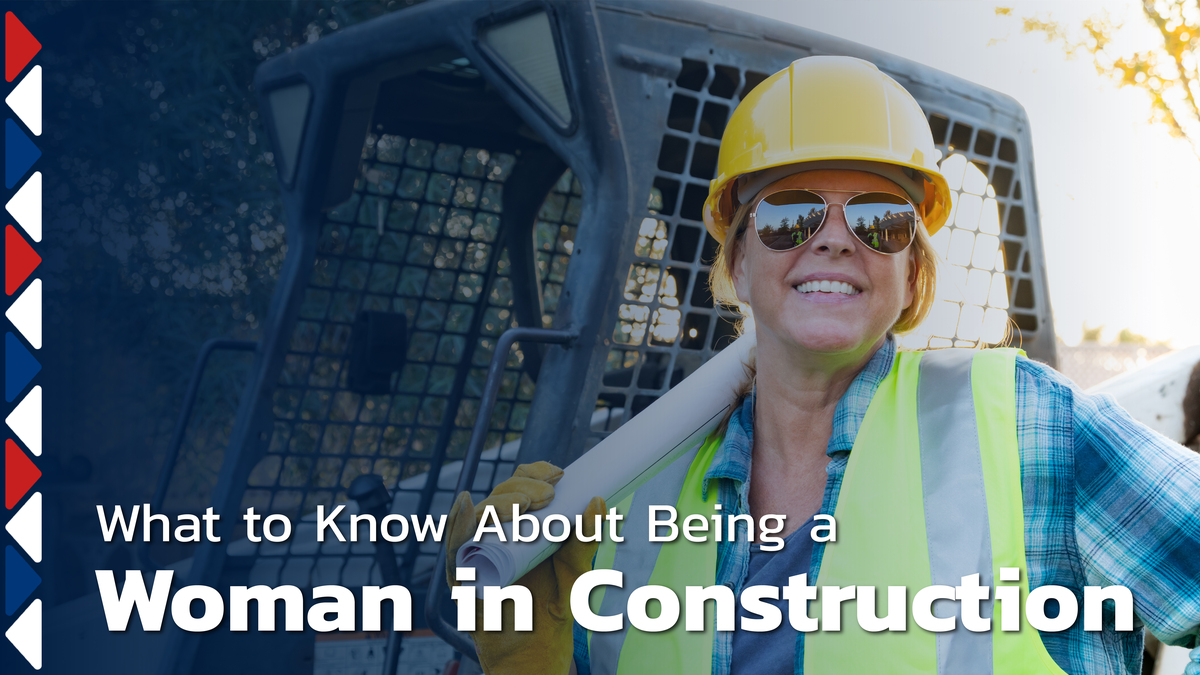
What to Know About Being a Woman in Construction
Look up "women in construction" and you'll find two flavors of unhelpful articles. There's the rah-rah corporate kind, where every paragraph ends with an exclamation point and nobody mentions the hard parts. Then there's the doom-and-gloom kind, heavy on statistics about how few women are in the industry, light on anything you can actually use. If you're weighing a career move, you deserve better than both.
This blog is the practical stuff: pay, daily work, culture, and how to tell whether a company is worth your time. The kind of information you'd want if you were asking someone who actually works on a crew. Let’s get into it.
The Money Is Better Than You Think
Let's start with the part that makes everything else worth discussing. Construction is one of the highest-paying industries for workers without a four-year degree, and the pay doesn't come with student loan debt attached. According to LumberFi's industry data, average pay for heavy equipment operators sits in the high $40Ks, skilled trades roles land in the $50K to $60K range, and foremen and project managers climb well into six figures.
Here's the number that tends to surprise people: women in construction earn roughly 95 to 96 cents on the dollar compared to men in the same roles. That's one of the narrowest gender pay gaps in any industry.
And the demand side is working in your favor. Over 90% of construction firms report difficulty filling skilled positions, and industry unemployment is tracking near historic lows. You're not asking anyone for a favor here; companies like Charles H. Hamilton are actively hiring because they need skilled workers and there aren't enough of them.
.jpg)
What a Day on a Crew Actually Looks Like
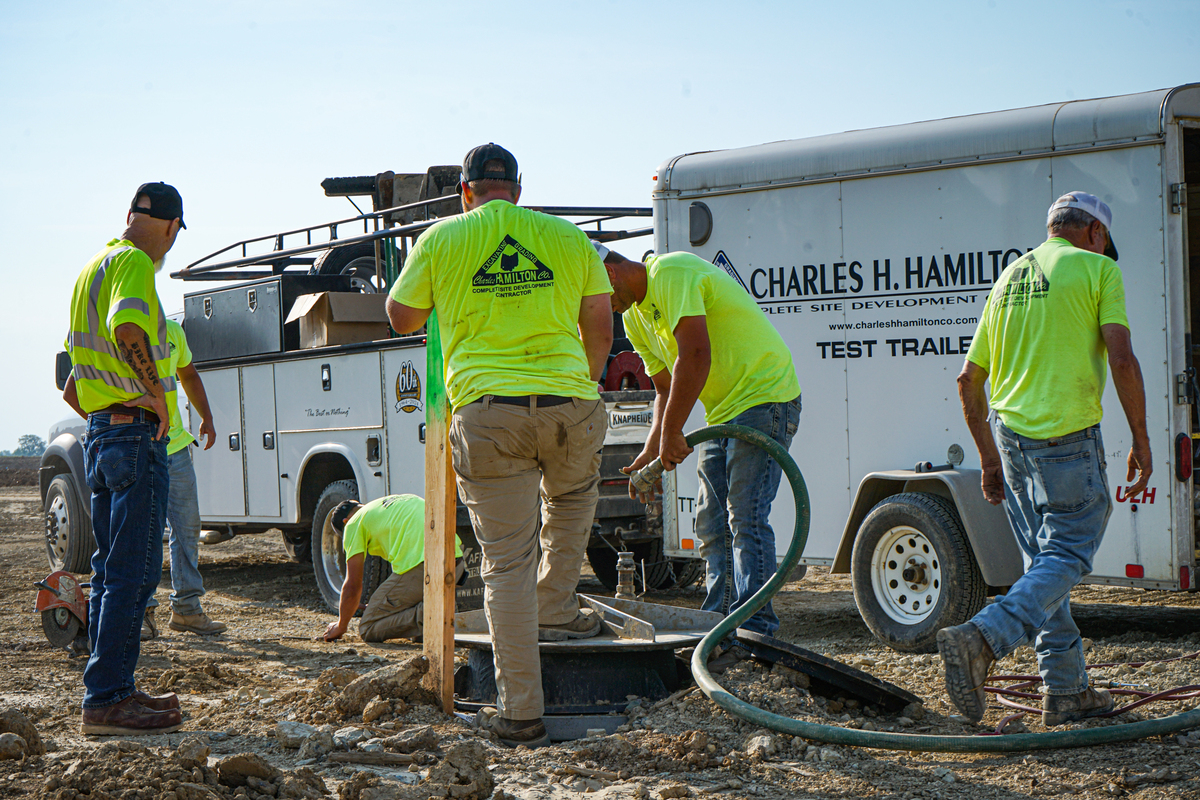
Days start early. Most crews are on-site by 7:00 or 7:30, and the first thing that happens is a safety huddle: what's the scope today, what hazards are on-site, who's doing what. From there, it's task assignments based on the day's work, whether that's grading, laying pipe, pouring concrete, or running equipment.
The work is physical, and there's no point pretending otherwise. You're on your feet in weather that doesn't care about your comfort level, handling materials and tools that have real weight to them. But modern equipment and GPS technology have changed what a construction worker does on a daily basis. Technique and machinery do a lot of the heavy lifting that used to be purely manual. Physical fitness is something you build on the job, not a prerequisite you need before you show up.
The rhythm is collaborative. You're working alongside a crew toward something visible: a graded lot, a finished pour, a utility line that wasn't there yesterday. The people who tend to thrive in this environment are the ones who like tangible results and don't mind getting dirty to get them. And the way you earn your place on a crew is the same regardless of gender: show up ready, learn fast, and pull your weight.
The Culture Question, Answered Honestly
This is the section most blogs either skip or sugarcoat, so here it is straight.
The industry has changed. Women's representation in construction has grown roughly 40 to 45% over the past decade, reaching its highest share in twenty years at about 11.2% of the workforce (closer to 14.4% when you include office and support roles). Federal initiatives like the Million Women in Construction push reflect a real institutional shift, and organizations like Professional Women in Construction (PWC) give women contractors and tradeswomen a professional network that didn't exist at this scale a decade ago.
That said, the problems aren't gone. Survey data shows roughly 26 to 27% of tradeswomen report high levels of gender-based harassment on the job, and nearly half feel treated differently than male coworkers. Those numbers are real, and pretending they aren't doesn't help anyone make an informed decision.
Then there's the PPE issue, which tells you more about a company's culture than any mission statement will. Most personal protective equipment was originally designed around 1950s male military body measurements. Women working in oversized boots face trip hazards. Loose gloves catch in machinery. Ill-fitting harnesses compromise fall protection. More manufacturers are producing women-specific gear now, but access varies from company to company. A company that takes jobsite safety seriously should be proactive about PPE fit, not reactive.
The honest read: the industry is demonstrably better than it was ten years ago, and it still has real ground to cover. Both of those things are true at the same time.
.jpg)
How to Tell If an Employer Is Worth Your Time
You have leverage in this market. Use it by knowing what to look for.
Start with PPE. A company that provides properly fitting gear without being asked is showing you how it operates across the board. A company that hands you men's medium gloves and shrugs is showing you something too. PPE fit is the fastest litmus test for whether a company treats safety as a practice or a slogan.
Next, look at how the company assigns work and develops people. Skill-first hiring means crew placement is based on what you can do, not assumptions about what you can't. It means there's a real path from laborer to equipment operator, with training that's available to everyone. Ask about it directly: What does growth look like here? Who decides task assignments? What training is available, and who gets access to it? A company worth your time will have specific answers, not vague ones.
A few red flags to watch for: an employer that treats hiring a woman as a headline instead of a normal Tuesday. Vague language about "advancement opportunities" with no specifics. Any resistance to discussing PPE fit, crew structure, or how safety concerns get handled. These are signals, and they're worth paying attention to.
The smartest thing you can do when figuring out how to get into construction is pick the right company first. Professional networks like PWC (Professional Women in Construction) and organizations like NAWIC can connect you with other women in construction management and field roles who've already done the vetting. Their insight is worth seeking out.
The goal is to walk into your first day knowing you chose a company that values your skills and your growth, not one that's checking a box.
Build a Career with Charles H. Hamilton
Charles H. Hamilton has spent over 60 years in excavation, utilities, and concrete work across Southwest Ohio. The company hires based on what you can do. Crews are built around skill, safety, and people who want to get better at what they do.
If you've read this far and you're ready to see what's available, check out our open positions and find where you fit. Got questions first? Reach out to our team directly. We'd like to hear from you.