You Don't Need a Degree to Start Building a Career
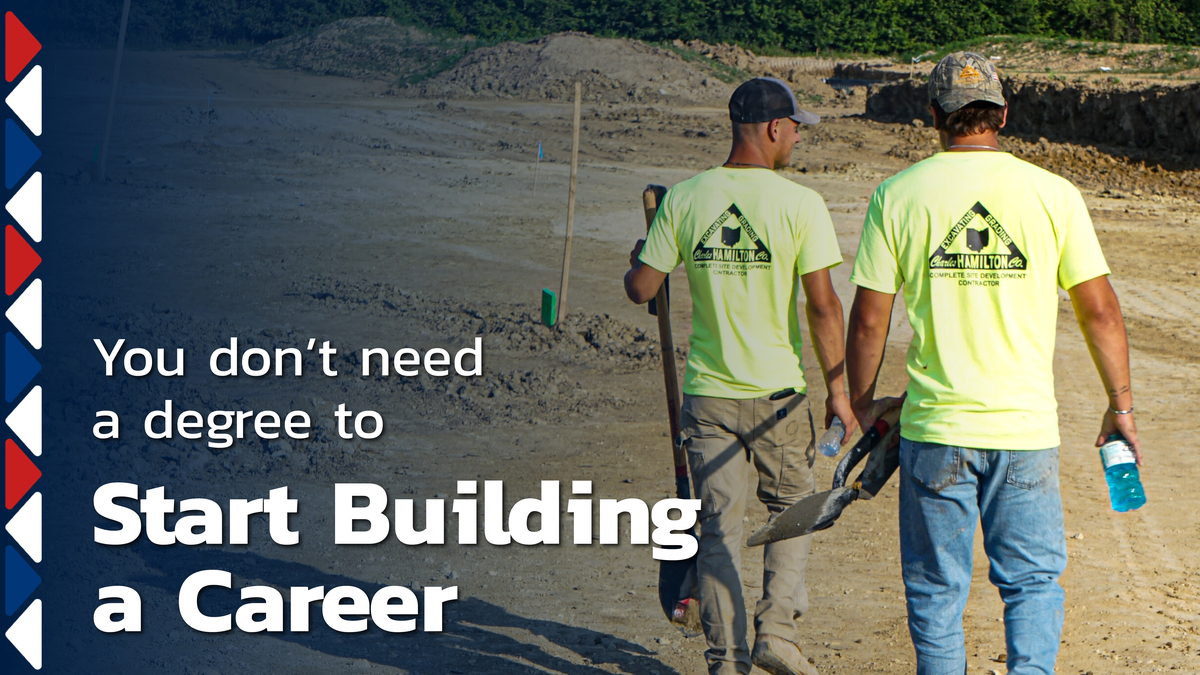
Go to college, get a degree, figure out the rest. You've heard it. A lot. From pretty much every adult who's had an opinion about your future.
It's fine advice for some people. But it skips over a path that pays you from day one instead of billing you for four years.
Construction careers don't start with an application to a university. They start with showing up, being willing to learn, and putting in the work. No diploma required. No waiting around for four years before your life starts. And the money? It's better than most people assume.
If you're a high school senior weighing your options right now, or a parent trying to help your kid figure out the next step, here's the part nobody's putting on the guidance counselor's whiteboard.
The Math Nobody Shows You
According to the Bureau of Labor Statistics, the average construction worker earns around $38,000 to $42,000 a year starting out. At 18, that's a paycheck hitting your account while some of your classmates are signing tuition paperwork. Fast forward to 22. You've got four years of paychecks, growing skills, and no school debt. They've got a diploma and roughly $30,000 in student loans, and they're just now entering the job market.
That’s not meant to be a knock on college. Just a comparison most people never see laid out.
And it's math that more people your age are actually running. Since 2011, enrollment in traditional four-year programs has dropped by about two million students, and Gen Z now makes up nearly 25% of new hires in the skilled trades. The shift is already happening. The cost of a four-year degree keeps climbing, and the gap between what college costs and what trades workers earn right out of the gate keeps narrowing.
You don't have to be against college to look at those numbers and think: maybe there's a different way to start.
What You're Actually Learning on a Job Site
There's a version of construction work that lives in people's heads: digging holes, carrying stuff, repeat. That's not the job.
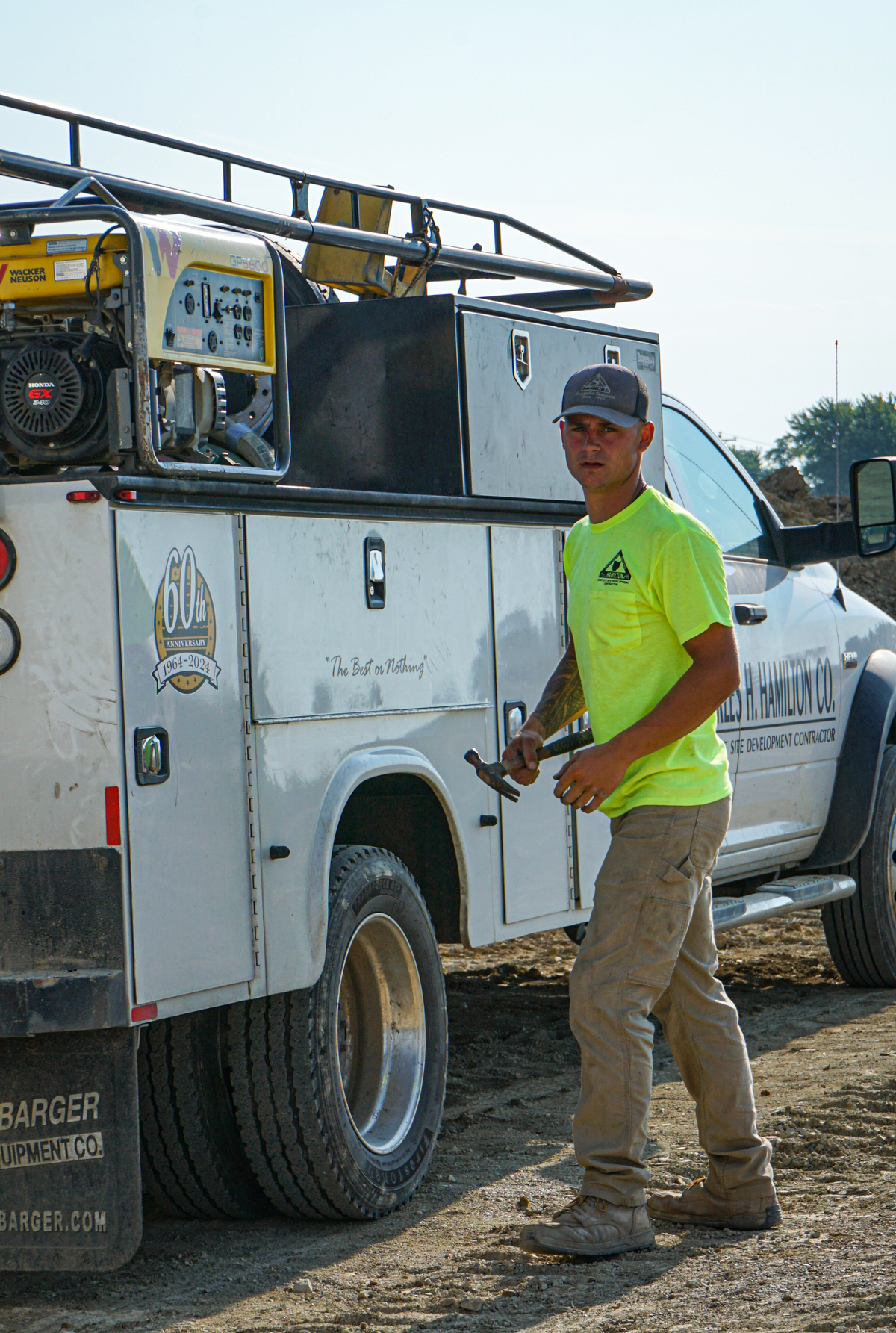
At a company like Charles H. Hamilton, crews work on full site development projects. That means operating GPS-guided dozers, reading drainage plans, understanding how grading affects an entire subdivision's infrastructure, and working as a team to accomplish goals. None of that comes from a textbook. You learn it by doing it, and every project adds something new to what you're able to handle.
These are skills you pick up on the job, under real conditions, with real stakes. A laborer who pays attention and keeps showing up doesn't stay a laborer. Growth in a construction career is built on what you can do, not what's printed on a transcript.
And here's something that might surprise you: people in the trades consistently report some of the highest job satisfaction rates of any industry. There's a reason for that. You spend your day solving real problems, working with a crew, and driving past finished projects that exist because of work you did with your own hands. That hits different than a desk and a screen.
Where This Goes from Here
"Okay, but where do I actually end up?"
Here's what the construction career path looks like, with real numbers.
You start as a laborer, earning somewhere in the mid-to-high $30Ks. You learn the basics, show up, and pay attention. Within a few years, you could choose to move into equipment operation or a skilled specialty, and your pay jumps into the $50,000 to $60,000 range. Foremen and superintendents, the people running crews and coordinating projects, earn $65,000 to $80,000 or more. Senior management and company owners? Over $100,000.
At Charles H. Hamilton, the laborer-to-operator progression is real. The company invests in training people who are willing to put in the effort, and the crew members who grow their skills get the chance to run bigger equipment and take on more responsibility.
The people who move up are the ones who keep getting better at the work.
.jpg)
Let's Talk About the Reputation
You already know the concerns. Your parents probably have them, too. So, let's just go through them.
Is it safe?
Construction is physical work, and the risks are real. But the industry has changed a lot. OSHA regulations have cut construction workplace fatalities by 66% since 1971, and injury rates have dropped from around 11 per 100 workers to under 3. Companies like Charles H. Hamilton run daily safety briefings, routine equipment inspections, and maintain their fleet to a high standard. Safety isn't something tacked on at the end of the day. It's how the day starts.
Is the work steady?
Honest answer: construction is seasonal. In the tri-state area, the busy season runs roughly April through December, weather depending. Most guys on a crew plan for it by setting aside part of each paycheck during the busy months so the slower weeks don't hit as hard. But the demand for skilled workers isn't slowing down. The industry needs an estimated 723,000 new workers per year just to keep up.
What will people think?
One in four young people thinks their parents would be disappointed by a construction career. But fewer than one in ten parents actually feel that way. Most of the stigma around skilled trades lives in assumptions, not in conversations that have actually happened.
And here's one more number: only 28% of future jobs are projected to require a four-year degree. The world is already shifting. The people doing skilled work know it.
Build Your Career with Charles H. Hamilton
Charles H. Hamilton has been in the site development, excavation, utilities, and concrete business for over 60 years. The company turns raw ground into finished subdivisions, and they've built a reputation in the Cincinnati and Dayton area by doing that work at a level that holds up.
They're also a company that invests in the people who walk through the door ready to work. On-the-job training. Real advancement from within. Crews that take pride in what they build and in bringing new workers up to speed.
You don't need a degree. You don't need five years of experience. You need to be willing to show up, learn, and put in the effort.
Check out open positions at Charles H. Hamilton and see what's possible.