Why Does Concrete Crack? How to Tell a Normal Crack from a Real Problem
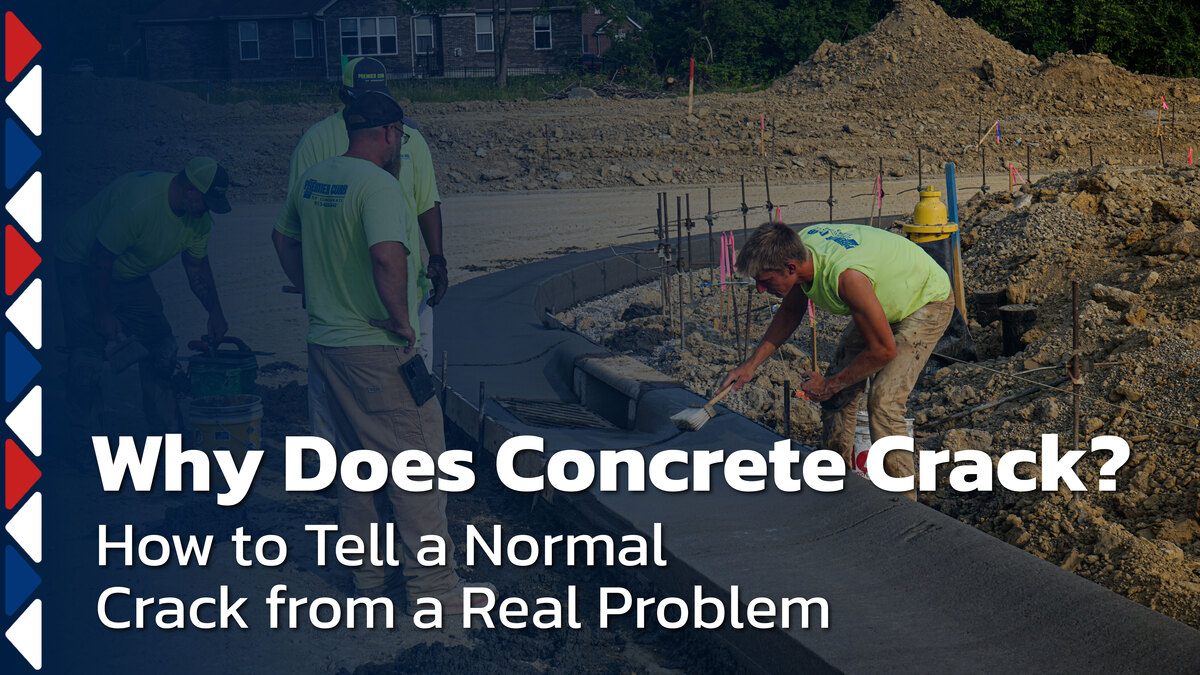
You poured a slab or a curb line. The work looked clean. Now there's a crack in it, and you want to know one thing. Is it a problem?
Most cracks aren't. Concrete cracks as it cures, and a hairline crack is rarely a sign anyone did anything wrong. But some cracks tell a different story. They point to a bad mix, a rushed pour, or joints placed wrong. You can't always tell which by looking, and that's what sends people searching. This blog walks you through the difference, so you can read the crack on your own site.
Why Concrete Cracks in the First Place
Concrete shrinks as it cures. Water leaves the mix, and the slab pulls in on itself. That pull has to go somewhere. When the tension beats the concrete's strength, it cracks. This happens on good pours and bad ones. A crack on its own doesn't tell you much.
Good crews plan for it. They cut control joints into the slab, which are straight grooves tooled or sawed at set intervals. The joint is a deliberate weak line. The slab cracks down at the bottom of it, where you'll never see it. That's the whole idea. The crack still happens. It just happens where the crew put it. So a clean joint line with no random cracking around it isn't a slab that didn't crack. It's one that cracked exactly where it was supposed to.
The Cracks That Are Normal
Most of what you'll see on a finished pour is harmless. These cracks come from concrete being concrete. They don't threaten how the slab performs.
Hairline shrinkage cracks are the most common. They're thin and shallow, and they show up in the first days or weeks as the slab dries. You'll often find one running off a corner. They look like trouble to an untrained eye. A crack you can barely catch a fingernail in is doing no structural harm.
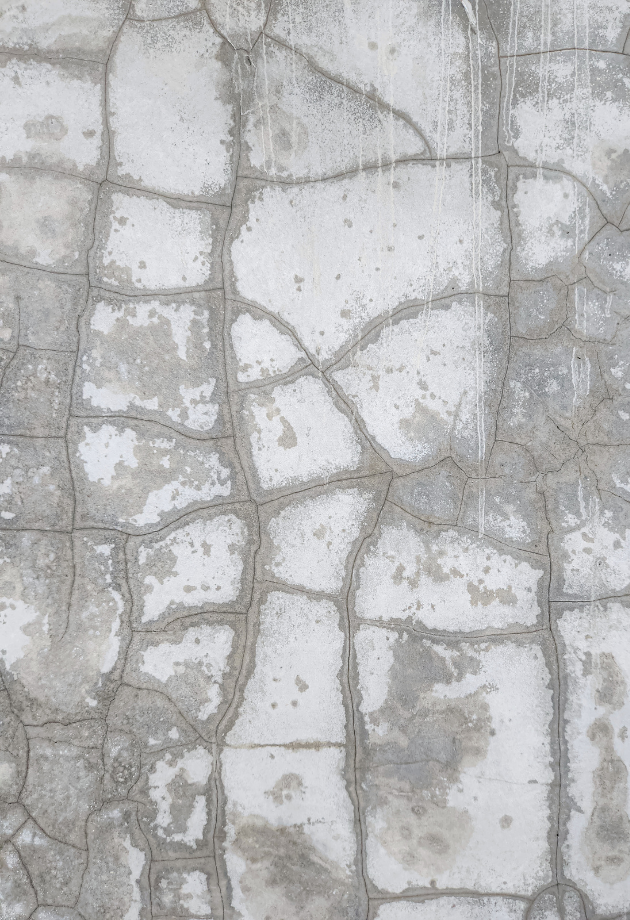
Crazing is the other one people worry about for no reason. It's a web of fine, shallow lines across the surface, like cracked glaze on a mug. The top layer dried faster than the concrete underneath. It's surface-only. It doesn't go deep, and it doesn't weaken the slab.
Cracks at the joints are the best kind to find. They mean the joints did their job. The slab relieved its stress right where the crew designed it to. That's not a defect. That's the plan working.
The Cracks That Signal a Problem
A smaller set of cracks earns a closer look. These don't come from concrete behaving normally. Something went wrong in the mix, the prep, or the pour. They're worth a call to whoever did the work.
Wide cracks are the first flag. A crack you can fit a coin into has opened well past normal shrinkage. On a slab, that usually points to a weak subgrade or missing reinforcement underneath. The base moved, and the slab went with it.
Cracks that ignore the joints are the clearest tell. A crack should live in the grooves the crew cut. When one runs across a panel and cuts past the joints instead, the jointing failed. The joints were spaced too far apart, or they were cut too late. Either way, the slab found its own place to crack before the crew gave it one.
Cracks with a lip are the ones to take seriously. Run your hand across the crack. If one side sits higher than the other, the slab has moved and settled. That vertical step means a base or drainage problem under the concrete. It tends to get worse, not better.
Map cracking is the last one. It looks like crazing at first, but it runs deeper and breaks the surface into connected patches. It usually traces back to a bad mix or a botched finish. The concrete itself was compromised, not just stressed.
Can Heat Make Concrete Crack?
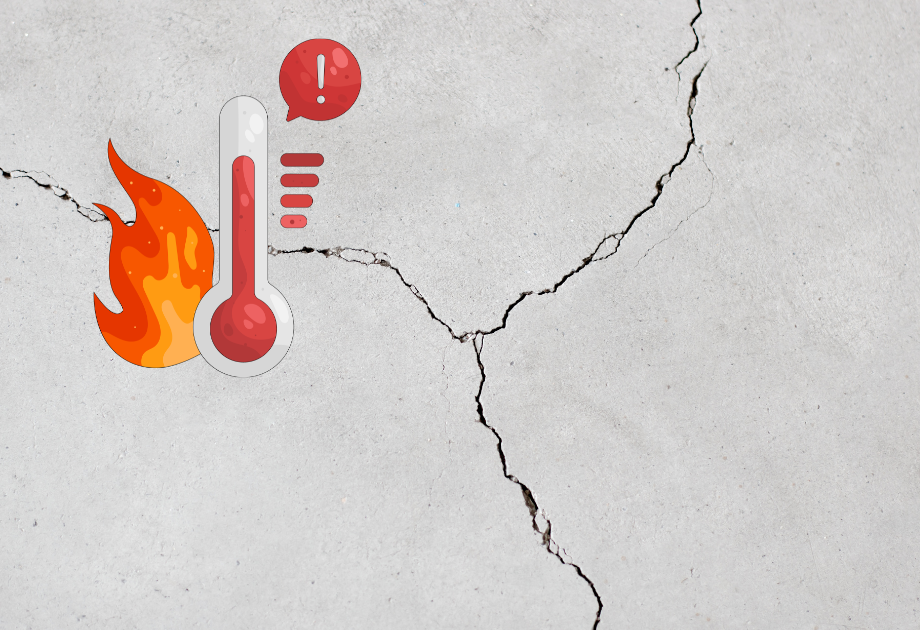
Heat is one of the bigger reasons a pour cracks, and a Southwest Ohio summer brings plenty of it. A 90-degree afternoon and a 60-degree night put concrete through real movement. The heat expands it. The evening pulls it back. A fresh slab curing through that swing carries more stress than one poured in steady weather. That's thermal cracking. The bigger the day-to-night change, the more the concrete moves.
Heat works on a fresh pour another way too. On a hot, dry, windy day, the surface gives up its water fast. The concrete below can't push moisture up quickly enough to replace it. The top skins over and shrinks while the bottom is still wet, and the surface tears. That's plastic shrinkage cracking. It shows up as short, random cracks within hours of the pour.
None of this means you can't pour in summer. It means a hot-weather pour asks more of the crew. They adjust the mix, work around the heat, and protect the surface from drying too fast. Done right, a summer slab holds up fine. The weather just leaves less room for cut corners.
How Soon Is Too Soon for Concrete to Crack?
Early cracking throws people. A crack the same day or the next feels like something broke. Often it didn't. Plastic shrinkage cracks from heat show up within hours. Shrinkage cracks appear over the first few weeks as the slab cures. Early doesn't mean defective.
What you read is the crack, not the clock. An early crack that's hairline-thin, shallow, and near the joints is almost always routine shrinkage. An early crack that's wide, crosses the slab past the joints, or has one side stepped up is a different matter. It doesn't get a pass for showing up soon. Timing alone won't tell you. What the crack looks like will.
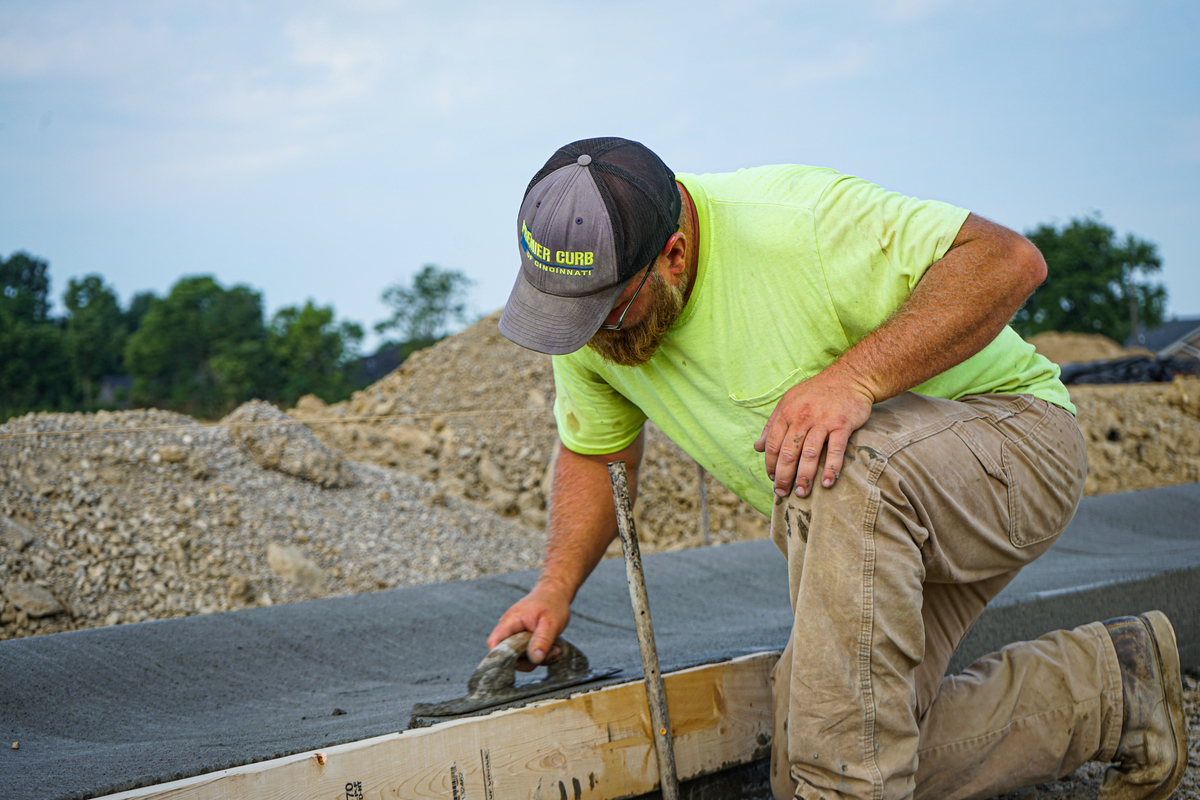
How Good Crews Keep Cracks Under Control
Controlled cracking comes down to decisions made before and during the pour. A good crew manages a few things the finished slab can't show you directly.
They lay the joints out against the specific pour before a truck arrives. Spacing follows the slab's thickness. A 4-inch slab usually gets joints every 8 to 12 feet, with panels kept square, since long, narrow rectangles crack unpredictably. They also time the saw cut by reading the slab. Cut too early and the blade tears the soft surface. Cut too late and the slab has already cracked on its own. A big temperature swing tightens that window, which is when an experienced crew earns its keep.
That's the work behind a slab that cracks where it should and nowhere else. For a closer look at reading whether a crew knows what it's doing, the finished joints tell you more than any bid.
Start Your Project with Premier Curb of Cincinnati
A crack you can read is a crack you don't have to worry about. The crew that controls where concrete cracks is the one worth hiring. Premier Curb of Cincinnati lays joints out against the actual pour and times the cut by reading the slab. The crew adjusts to the heat of a Southwest Ohio summer. You get curb and flatwork that cracks on plan, not by accident. When you want a crew that knows concrete behavior, not just placement, start your project with a team you can trust.