What Your Concrete Sub's Weather Response Is Really Telling You
If you've run more than a few projects in Southwest Ohio, you already know weather will interrupt a concrete schedule. The region averages 40 to 45 inches of precipitation a year. It logs over 100 days below freezing. None of that is news to you.
You probably did your homework before hiring your concrete sub, too. Checked references. Asked about communication and timelines. Everything sounded right at the bid table. But the bid process can't show you how a crew actually handles weather once the project is underway. The first rain day on the job can. This blog teaches you how to read that first weather event and what to do if you don't like what you see.
The First Weather Event Is a Test. Pay Attention to It.
Every crew looks competent on a dry day. Weather is where the operation shows itself. The first time conditions shut down a pour on your project, you're going to learn three things at once. How those three things play out will repeat for every weather event that follows.
Did they call you? A crew with a communication process reaches out the morning of or the night before. They tell you what got done, what didn't, when the reschedule is, and whether it affects anything downstream. That call takes five minutes. If you had to make it yourself, that's your first data point.
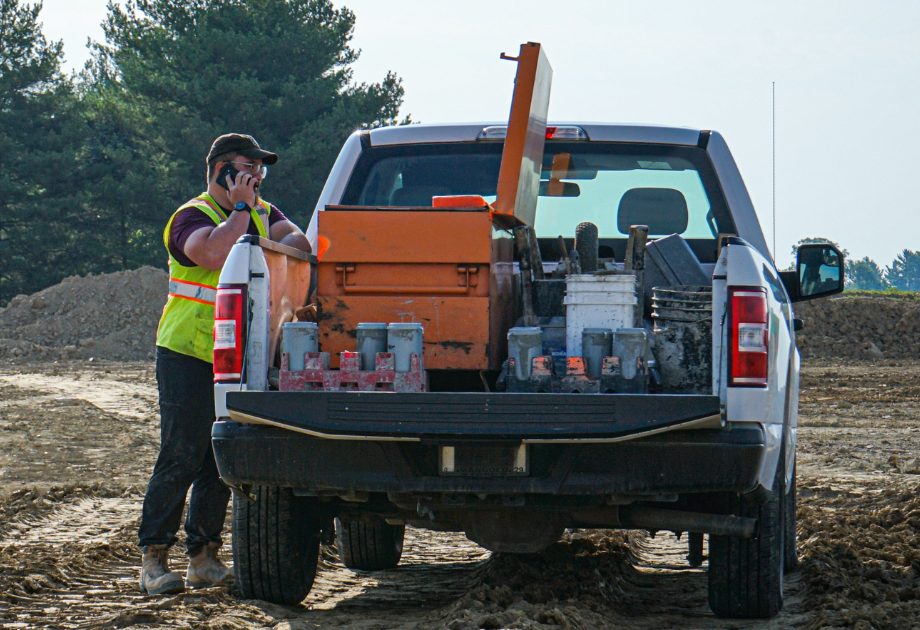
Was the active work protected? Walk the site after the weather passes. Tarps over fresh pours and cleared drainage paths don't appear on their own. If you see them, the crew planned for this before the truck arrived. If you see standing water on an uncovered slab, they didn't. That's your second data point.
How fast did they have a recovery plan? A missed pour day doesn't reset overnight. Concrete delivery is scheduled in advance. The crew has to rebook the batch plant, line up the inspector, and sequence themselves back onto the site. Good crews start that process while it's still raining. If you're two days out from the weather event and still waiting on a new pour date, that's your third.
These three behaviors form a single picture. The same instincts that help you spot quality in finished concrete work apply here. You're reading the crew, not the weather report.
What Rain Does to a Pour and Why Crew Response Determines the Outcome
Rain doesn't automatically ruin concrete work. But unprotected fresh concrete is vulnerable. Rain on a fresh pour dilutes the water-to-cement ratio at the surface. That weakens the finish. Over time, it can compromise the slab's structural performance.
The vulnerability window is short. The first few hours after the pour are when the mix is most exposed. A crew that has tarps staged and drainage planned before the pour begins can cover the work within minutes of the first drops. That protection is the difference between a slab that performs for decades and one that starts showing damage in its first winter.
The GC doesn't need to manage this process. But the GC does need to know whether their crew already has a plan for it. If the first rain event on your project catches the crew off guard, every future rain event carries the same risk to your concrete and your schedule.

What to Do If the Signs Are Bad
So the first weather event came and went. The crew didn't call. The site wasn't protected. The recovery took longer than it should have. Now you're facing scope creep you didn't budget for and wondering what your options are.
Switching subs mid-project is disruptive. Sometimes it's not feasible at all, especially if the crew is partway through a phased pour. But doing nothing isn't a strategy either. Here's a realistic range of responses depending on how bad it was.
Start with a direct conversation. Name what you observed. Be specific: "I didn't hear from anyone until I called on Wednesday. The forms weren't covered. The reschedule took four days." Ask them what their plan is for the next weather event. Their response tells you whether the first event was a lapse or a pattern.
Document everything. If you're considering a change, you'll need a record. Dates, communications (or the lack of them), site conditions, schedule impact. This protects you whether you stay with the current sub or bring someone new in.
Build buffer into the remaining schedule. If you're going to keep this crew on, adjust your timeline to absorb the delays they're likely to create. Talk to your paving and grading subs about flexibility. A concrete delay early in the trade sequence pushes every trade behind it. The buffer needs to account for more than just the concrete phase.
If it's bad enough, start looking. You don't have to fire anyone on the spot. But you can begin identifying a replacement sub while managing the current one through the next milestone. Knowing what to look for in a concrete contractor makes that process faster when the time comes.

What to Build into the Next Contract
You can't contract your way out of bad weather. But you can set expectations in writing so that weather response becomes a deliverable, not a hope.
Most sub agreements don't include language about communication timelines after a weather event. They should. Require the sub to notify the GC within a set window (same day or next morning) when weather disrupts the schedule. That clause gives you something to point to if the silence starts. It also tells the sub, before the project begins, that you're paying attention to this.
Site protection standards are worth spelling out, too. Spell out that the sub is responsible for covering active pours and managing drainage on their work area during weather events. That expectation is established before the first truck shows up. It's harder to have that conversation after you've already walked a site and found standing water on an uncovered slab.
Recovery benchmarks are trickier to standardize. But requiring the sub to provide an updated schedule within 48 hours of a weather delay gives the GC a concrete (no pun intended) timeline to hold them to. It also forces the sub to start the rebooking process immediately instead of letting days drift. Experienced subdivision concrete crews already operate this way. Putting it in writing just makes sure everyone else does too.
Start Your Next Project with Premier Curb of Cincinnati, a Crew That Has a Plan for Rain
Here's what the good version looks like. Rain is in the forecast. The night before, your concrete sub calls. They walk you through the plan: what's covered, what's postponed, and when the reschedule will be confirmed. You drive the site the next morning and see tarps over the active pour and drainage cleared. By end of day, you've got a new pour date and the inspector is booked. No one chased anyone.
That's how Premier Curb of Cincinnati operates. They've been pouring curb, gutter, and sidewalk across Southwest Ohio for decades as part of the Charles H. Hamilton family of companies. Their weather response isn't something you hope for. It's something you see confirmed the first time conditions test the schedule. If that's the standard you want on your next project, start a conversation today.