The Pre-Pour Concrete Checklist Every General Contractor Should Use
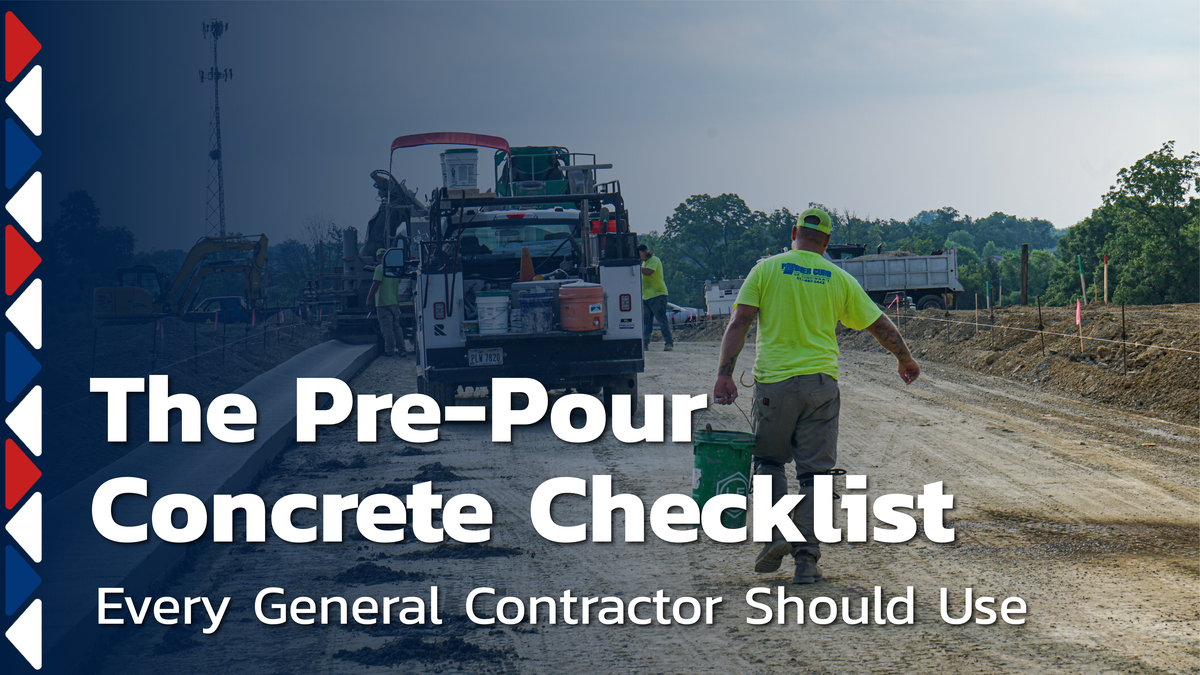
When a concrete pour goes sideways on a subdivision project, the instinct is to blame pour day. The truck showed up late. The crew wasn't ready. The finish looks rough. But most of those problems started long before concrete hit the forms. They started with skipped steps, missed coordination, or a pre-pour process that never really happened.
This isn't a guide on how to pour concrete. It's a checklist for what you, as the GC, should expect to see from your concrete sub before any material is placed. Every item on this list is something a prepared crew handles ahead of time. If your sub isn't doing this work before trucks are ordered, you're the one who'll be managing the fallout after the pour.
Verify the Grade and Base Before Anything Else
The subgrade is where the checklist starts because it's where the most expensive failures begin. Compaction, base material depth, and trench backfill all need to be verified before anything else moves forward. On a subdivision project, that covers curb, gutter, sidewalk, and pavement areas.
Granular base and engineered fill belong under those surfaces. They need to meet specified thickness and compaction requirements. Those requirements should be confirmed during pre-pour checks. Soft spots and poorly compacted utility trenches don't announce themselves on pour day. They show up weeks or months later as settlement cracks and drainage failures that trace straight back to what was underneath. Your concrete sub should have already walked the grade and flagged anything that doesn't meet spec. If that conversation hasn't happened before trucks are called, the risk shifts entirely to you.
Check Forms, Elevations, and Access
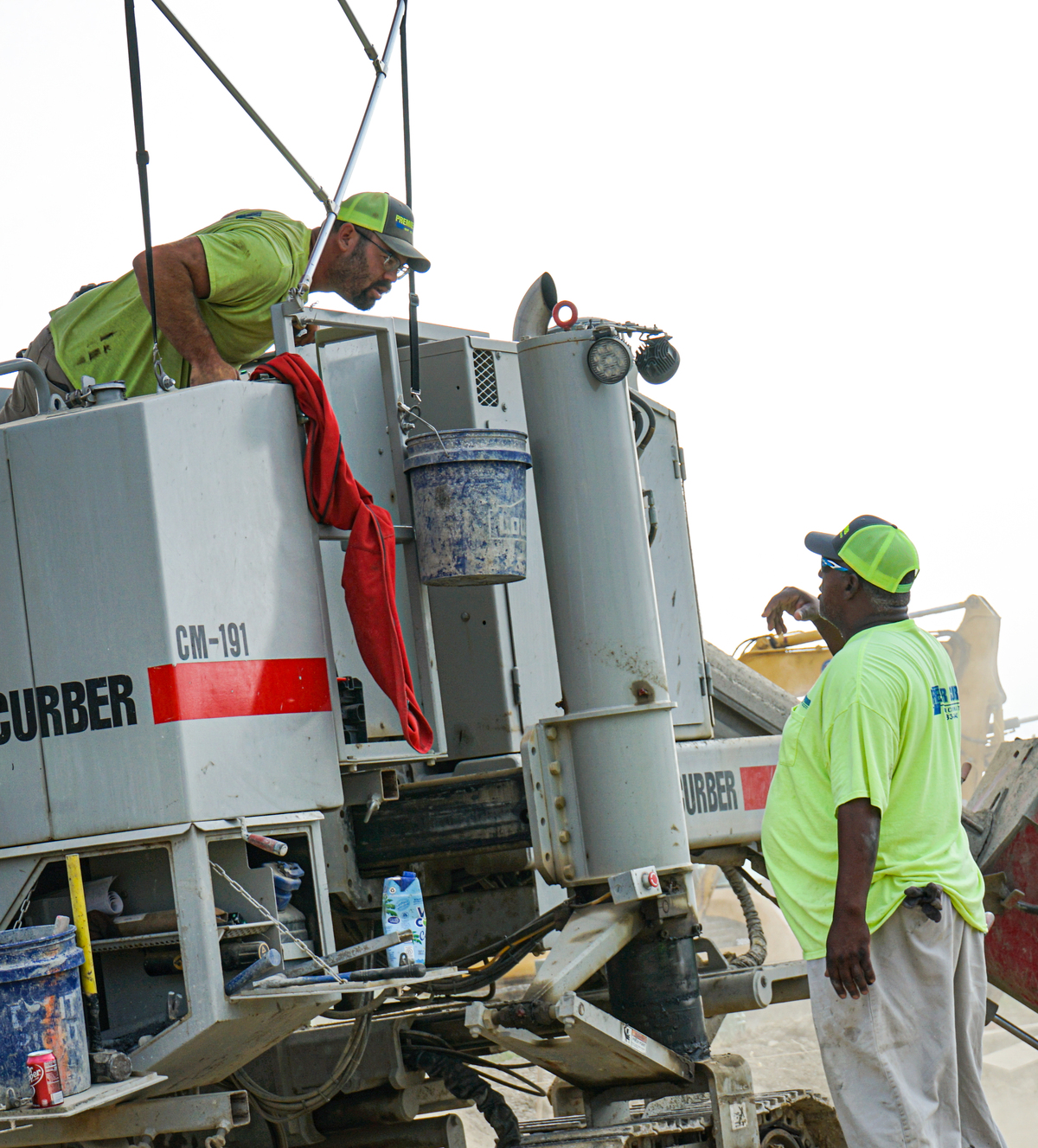
Once the grade is confirmed, the next checkpoint is what's built on top of it. Forms need to be set to correct line and grade, clean, tight, and braced well enough that they won't shift under vibration or placement pressure. Elevations need to be confirmed so finished surfaces drain correctly and match the site plan.
Access matters just as much. Truck and pump routes should be planned and clear before pour day, not worked out while the first truck is trying to back in. When formwork and scheduling coordination fall apart, the problems show up fast. Dirty forms leave surface defects. Loose bracing causes edge blowouts. A stalled truck burns time the crew can't get back. You don't need to check every form joint yourself. But you should expect your sub to have done it and to be able to confirm it when you ask.
Confirm the Pour Sequence and Weather Plan
With the physical site verified, the conversation shifts to the plan itself. Pour sequence, truck timing, and crew assignments should all be locked in before dispatch. Weather contingencies should be too. On a phased subdivision project, that means knowing which sections pour first and how curb sequencing relates to paving. It also means accounting for other trades working on-site.
The weather piece fits the same principle. A crew that operates from a system has already checked the forecast and knows how they'll adjust their approach if conditions shift. A crew without that system will be reacting in real time while concrete is setting up. You should hear this plan before pour day. If the first time your sub walks you through the sequence is on-site with a truck idling, that tells you something about how the rest of the prep went.
Line Up the Surveyor and Inspector Before You Need Them
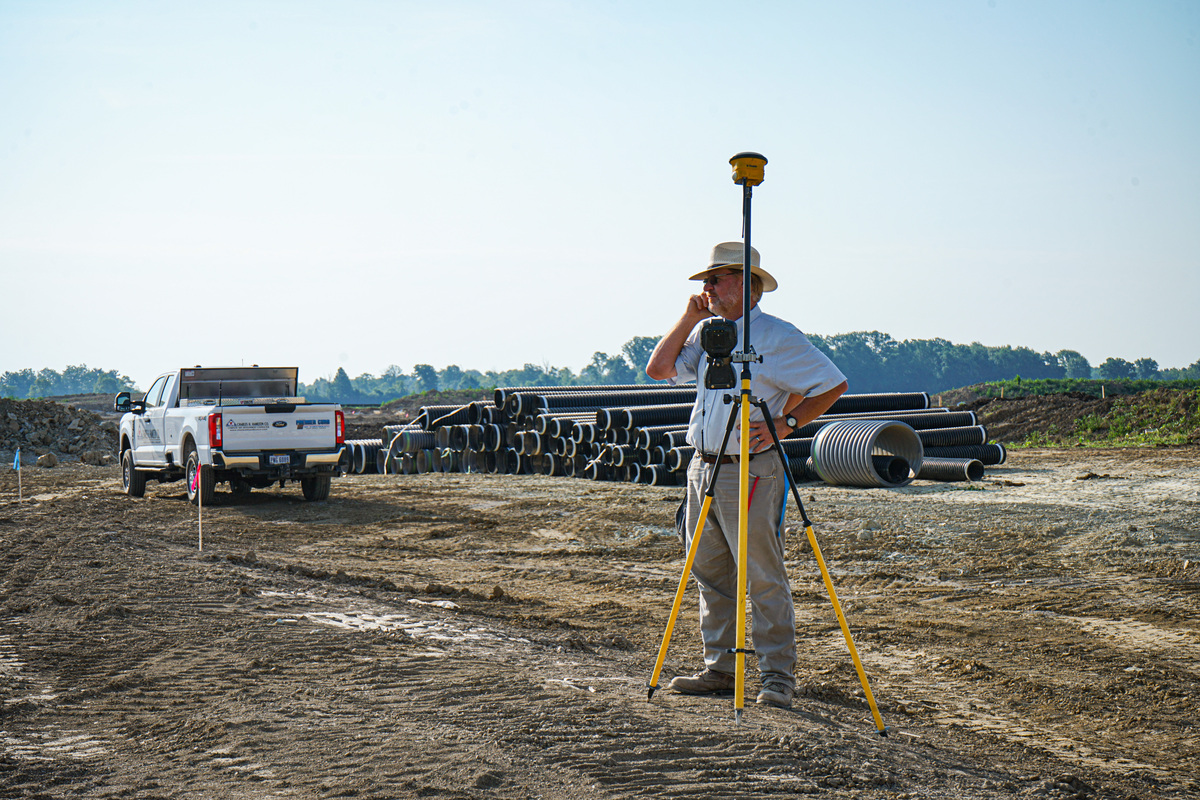
The pre-pour process involves more than just the crew. Surveyors confirm line and grade so finished curbs, sidewalks, and pavements drain correctly and align with the site plan. Inspectors verify that forms and reinforcement match approved plans and meet code requirements. Both of those sign-offs need to happen before concrete is placed, not alongside it.
The timing matters because the cost of getting it wrong is steep. Inspections done after placement can trigger failed results and schedule slips. In worse cases, they lead to disputes or partial demolition. Your job as the GC is to confirm that your sub has built these steps into the timeline with room to spare. If the surveyor and inspector are being squeezed into the margins of pour day, those sign-offs are being treated as a formality instead of a gate.
Know What a Ready Crew Looks Like (and What a Scramble Looks Like)
At this point, you've seen four checkpoints that define a solid pre-pour inspection process. The next step is knowing whether your sub actually ran them. The signals show up on-site before the first truck arrives.
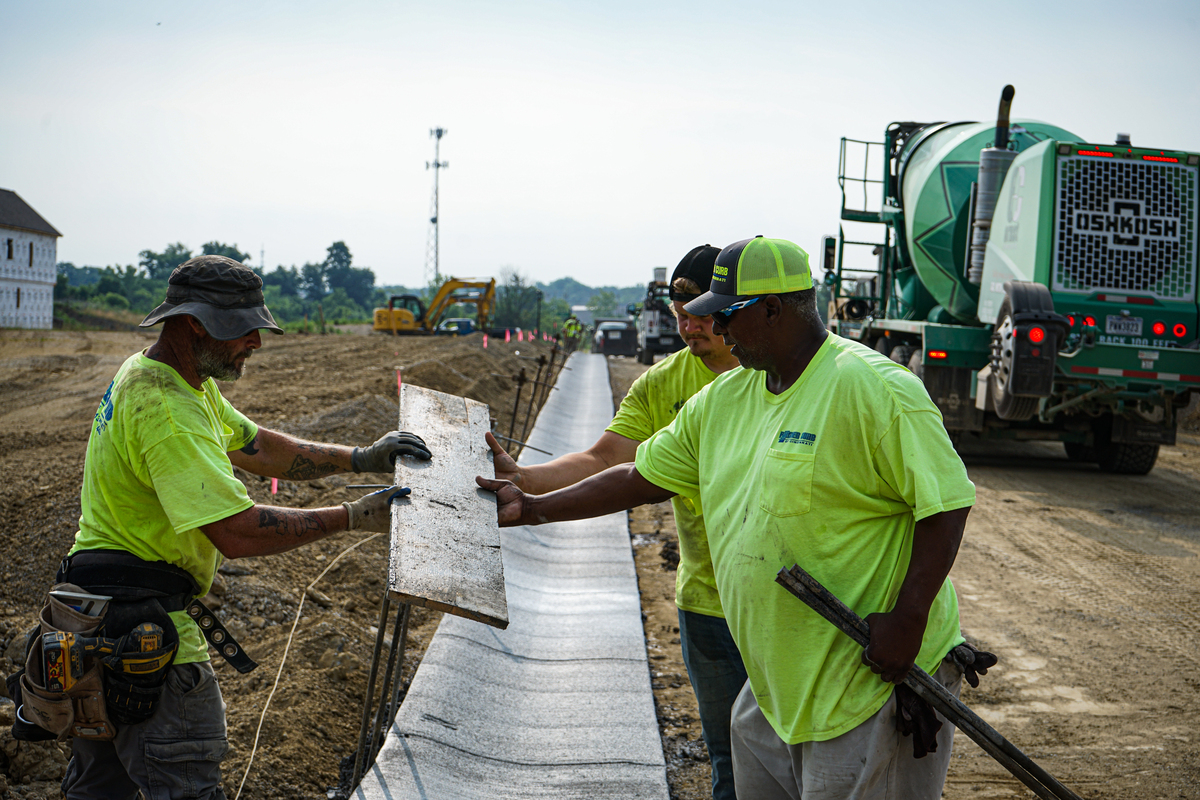
A crew that's ready has equipment staged and tools laid out before concrete shows up. They've been briefed on roles and pour sequence, and the grade and inspector sign-offs are already done. That's a crew working from a plan. Now picture the opposite. A crew still unloading when the truck pulls in. They're asking each other which section pours first. Forms still have debris in them. One of those crews runs a system. The other one creates problems you'll spend the rest of the week sorting out. You can usually tell which one you're dealing with in the first ten minutes.
What This Checklist Protects You From
Every skipped step on this list has a specific consequence. An unverified grade becomes a settlement crack or a drainage complaint after the homebuilder moves in. Loose or dirty forms become edge defects that land on the punch list. A missed inspection window pushes paving, delays lot releases, and backs up every trade waiting behind you.
The data backs up what experienced GCs already know. Front-end inspection discipline reduces later modifications. It also cuts costs tied to extra materials, labor, and downtime. On a multi-phase subdivision, even a few extra days of avoidable delay per pour compound across the full schedule. The concrete pre-pour checklist doesn't add time to the process. It protects the time you've already committed.
Talk to Premier Curb of Cincinnati About Your Next Project
The process described in this blog is the process Premier Curb of Cincinnati runs on every subdivision project. Grade verification, formwork checks, pour sequencing, inspector coordination, and crew readiness aren't extras. They're built into how the crew operates before the first truck is ever called.
If you're managing a subdivision project in Southwest Ohio and you want a concrete crew that shows up prepared, reach out to Premier Curb. Let's talk about your next pour.