How to Tell If Your Concrete Crew Knows What They're Doing

You already know the basics of hiring a concrete contractor. Check references. Verify insurance. Get a written estimate. Those are the right moves, but they tell you about a crew's paperwork, not their craft.
The thing is, you're already looking at finished concrete work every time you walk a job site. Curbs, flatwork, pours from other subs. You've got opinions about it, too, even if you can't always put your finger on why one crew's work looks sharp and another's looks like it was poured on a dare.
This blog breaks down the specific markers that separate a skilled crew from one that's winging it, so the next time you're picking a concrete contractor, you've got more than a gut feeling to go on.
Clean Edges and Consistent Curb Line
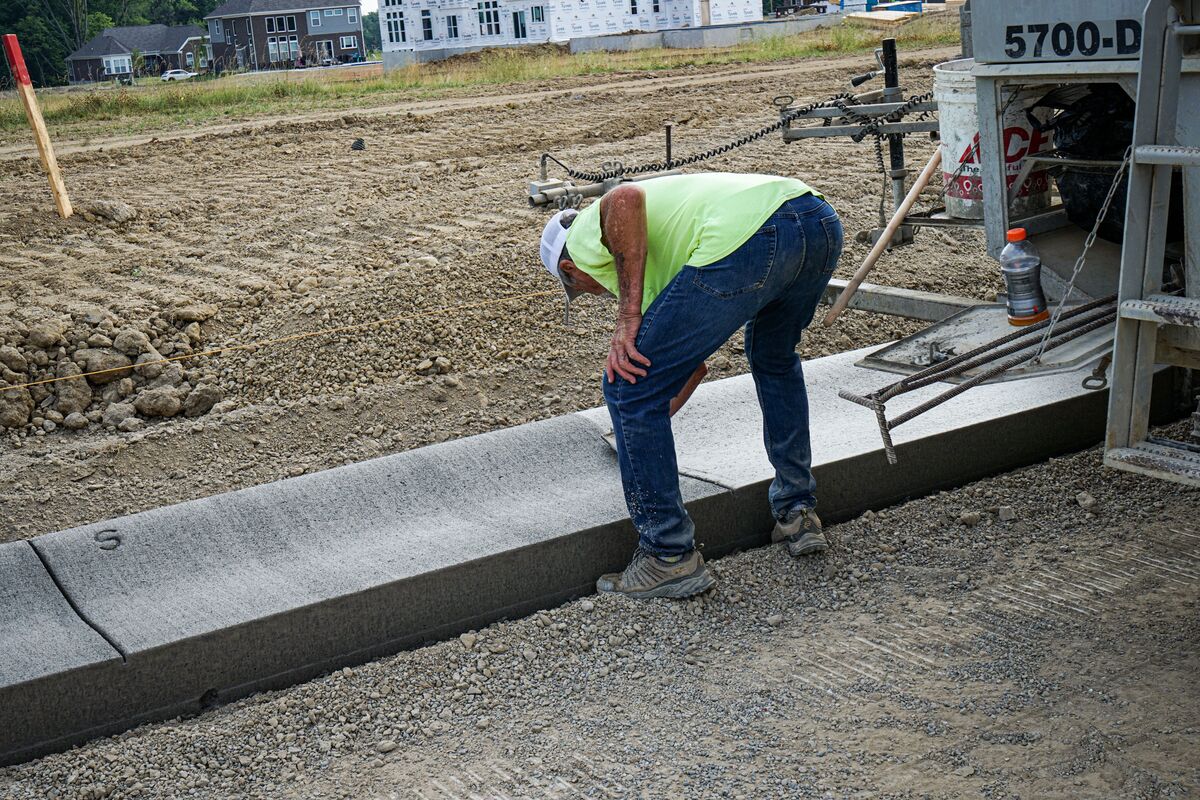
You notice this one before anything else, and that's the point. A clean, consistent curb line with crisp edges looks effortless when it's done well, but it takes real tool skill, solid form precision, and disciplined finishing to get there. When any of those were off during the pour, the finished product shows it. Wandering lines, uneven reveal, edges that look like they've already started losing the battle against time.
Municipal and DOT inspectors are looking at the same stuff you are. Straight alignment, consistent reveal, smooth transitions at driveways and inlets. So when something catches your eye walking a finished site, trust that instinct. You're seeing what the inspector sees.
Crisp edges aren't just about looks, either. Edges shaped with edgers or chamfer tools hold up better against chipping and spalling, especially in high-traffic areas where curb work takes a beating year after year.
Surface Finish Quality
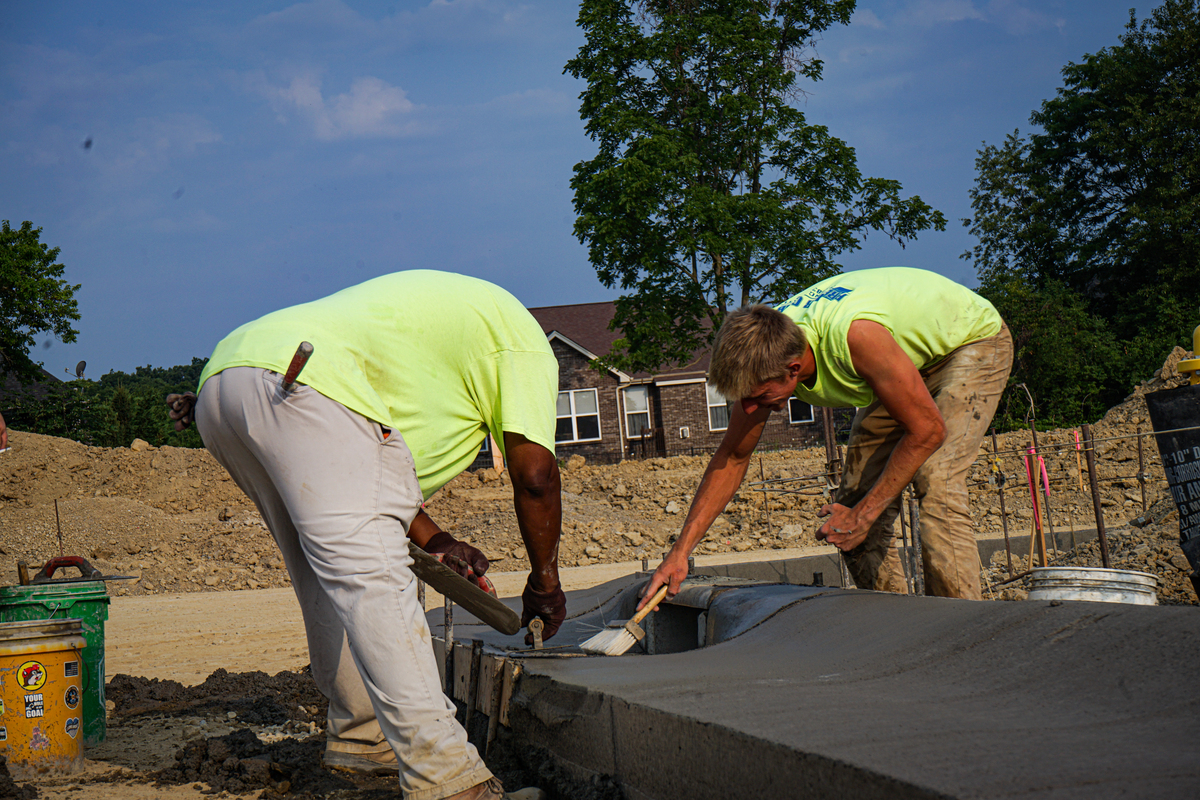
If the surface tells you anything, it's whether the crew had good timing. And in concrete work, timing is everything. You're looking for even, consistent texture across the full pour, uniform at joints and transitions, with no slick spots, weird ridges, or patchy trowel marks.
When timing is off, the surface will tell on them. Finish too early and you trap bleed water underneath, which eventually shows up as scaling and flaking. Finish too late and you're working against concrete that's already starting to harden, leaving rough, uneven patches that are hard to miss.
Good crews adjust on the fly for temperature, humidity, and wind. They're reading the concrete, not watching the clock. You can see the difference walking a finished slab, because the texture stays consistent from one end to the other. If it changes halfway through, that's not a material problem. That's a people problem. How a crew handles finishing and curing has everything to do with how that surface performs years from now.
Formwork Precision
You won't see the forms on finished work, but you'll absolutely see what they looked like. The forms are the mold. Every wave, bow, and wobble in a finished curb line or slab edge is a permanent record of what the formwork was doing before the pour.
Straight, consistent edges and true lines? That crew took the time to set tight, well-braced forms with smooth top edges. Wavy curbs and out-of-tolerance slab lines? Those forms were flexing, loose, or set in a hurry. You don't need to have been there for the setup. The finished product tells the whole story.
Good formwork holds true under fresh concrete pressure without flexing or shifting, and inspectors treat it as a pass/fail checkpoint for good reason.
Joint Spacing and Placement
This is where you find out whether a crew was thinking about how the slab performs in two years or just trying to finish the pour before lunch.
Control joint spacing should generally follow the 2-to-3 times slab thickness rule, so a 4-inch slab means joints every 8 to 12 feet. Exterior flatwork shouldn't exceed 15-foot spacing. You should also see joints at re-entrant corners, thickness changes, and intersections where stress loves to show up uninvited.
Deliberate, evenly spaced joint placement tells you the crew had a plan before the truck arrived. Random spacing tells you they were cutting joints as an afterthought, which is a bit like putting your seatbelt on after the accident. Poor joint spacing is one of the top causes of premature cracking, and that means rework, cost, and schedule headaches that ripple into every trade behind them.
How They Leave the Site
Finished concrete doesn't exist in a vacuum, so take a look around it. Are the gutters and edges clean, or is there laitance and sediment built up where it shouldn't be? Do the curbs and slabs line up with adjacent grades and drainage, or are there spots where water's going to pond?
A crew that does solid pour work but phones in everything around it is giving you useful information about where their effort drops off. The surrounding details affect drainage, durability, and how much cleanup the next trade has to handle. If the concrete looks great but the site tells a different story, pay attention to that gap. That's where you'll find the crew's actual standards.

Consistency Across the Full Job
Any crew can produce one beautiful curb section on a Tuesday morning when the weather's cooperating and everyone's had their coffee. That's not the test.
The test is whether those markers hold across 200 linear feet of curb, across multiple pours, across changing weather, and across the third week on site when the novelty has worn off and it's just work. Consistency at that scale means the crew has a system, not just a talented finisher having a great morning. That system is what you're actually paying for when you hire an experienced concrete crew.
Look for consistency across the full scope. It tells you more than any reference call ever will. If you're still weighing your options, choosing the right concrete contractor starts with knowing what to measure them against.
Premier Curb of Cincinnati: Built Around the Details That Matter
Premier Curb of Cincinnati has spent years building a process around the kind of consistency this blog describes. The crew shows up with a plan, executes with discipline, and leaves behind finished work that holds up to every marker on this list, pour after pour.
If you want a concrete crew that gets the details right and can prove it across the full scope of your project, let's talk about your next one.