10 Questions to Ask Before Hiring an Excavation Contractor
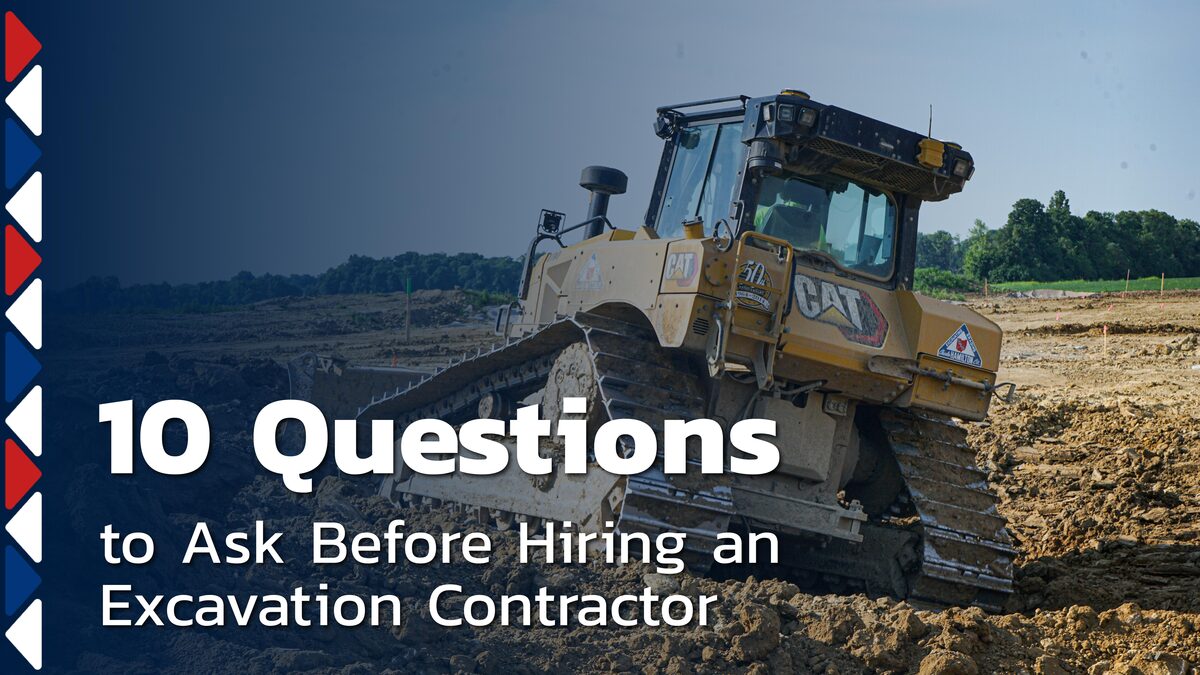
What should you ask an excavation contractor before you sign? Southwest Ohio ground can hide rock, clay, and groundwater inside the same quarter mile. And the excavation contractor you hire will spend the next year working through all of it on your behalf. So, treat your pre-construction meeting like a job interview, because that is what it is. There are questions that can tell you what you need to know about an excavation contractor before hiring them.
The ten questions below sort the contractors who come prepared for that ground from the ones who plan to bill you for their surprise.
1. How do you maintain your fleet, and how old is it?
Another company's equipment sounds like another company's problem until a dozer quits mid-grade on your site. From that moment, their breakdown is your delay. So ask what machines will show up and how they stay running. A strong answer starts with equipment the company owns. The contractor can then describe the routine and the age of the machines headed your way. Those maintenance standards protect your schedule. "We take care of our stuff" does not. People say the same thing about cars with the check engine light taped over.
2. Do you run GPS grade control on your dozers and compactors?
GPS grade control steers a dozer blade or compactor drum to the elevation the design calls for. For you, that means fewer regrades, less over-excavation, and less wasted stone. A contractor who invests in machine control can name the machines that carry it. The same contractor can explain how crews check grades against the design. Charles H. Hamilton has run GPS on its dozers and compactors for more than 20 years and checks finished work against drone-based 3D models. The vague answer treats "GPS" the way a menu treats "artisanal."
3. What happens when a machine goes down mid-project?
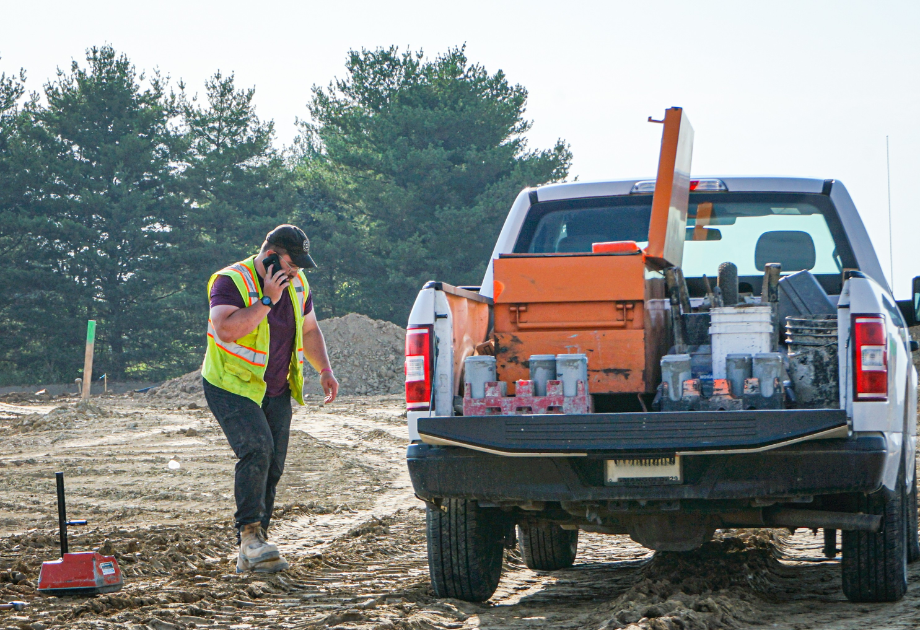
This question audits the first one. Anyone can recite a maintenance program. This one tests what happens when it fails anyway. A strong answer starts by admitting that breakdowns happen to everyone. Then it covers the spare machines and how fast one reaches your site. Contractors who plan for setbacks recover in days. "That doesn't really happen to us" comes from someone whose fleet is apparently immortal.
4. What scope do you self-perform, and what do you sub out?
Self-performed work means the contractor's own crews do it. Every task handed to a subcontractor adds a handoff, a markup, and one more schedule you do not control. Strong sitework contractors answer with a specific list on both sides. Charles H. Hamilton self-performs ground prep, gravel spreading, and finish grading. Its crews also set storm pipe and drainage structures. Curb and sidewalk work runs through Premier Curb of Cincinnati. Paving, traffic control, guardrail, striping, and signage go to subs. The estimate says so, because nobody self-performs everything. If a contractor blurs that line instead, the crew on your site might be three subcontractors in a trench coat.
5. What subdivisions like mine have you completed?
Run the answer through three tests: similar scale, local, and named. Site development contractors with local work can point to completed subdivisions you can drive today. Names and developer references come out before you ask. So does familiarity with local inspection timing, because only work in the area produces that detail. Those specifics are the fastest way to vet a site development partner. The vague answer is a tour of past projects that are always just like yours and never have an address.
.jpg)
6. How do you handle what the soil throws at you?
This is where Southwest Ohio ground earns its own question. The rock, clay, and groundwater can change over short distances. That variety is where a pre-construction budget goes sideways. Ask what the crew does about rock, water, and bad soil before any of it shows up. The strong answer names equipment. The same crews pump groundwater on sewer work and fix dirt that runs too dry or too wet. The vague answer describes optimism instead.
7. How do you sequence around other trades and inspections?
Subdivision projects rarely fail inside one trade's scope. They fail in the gaps between trades. So listen for the contractor who brings up the sequence before you do. That starts with utility sequencing and moves to inspection windows and paving phases. It includes knowing that residential surface asphalt waits until most of the houses go up. On a commercial site, the surface course goes down near opening. That contractor can also support the milestone tracking on your side. The vague answer treats your schedule like a suggestion box.
8. What's your plan when weather stops work?
Weather stops every contractor in Ohio. Preparation decides who gets back to work first. So ask what happens before the rain, not during it. The strong answer starts with jobsite drainage planned early. It moves on to protecting dirt and concrete before a freeze, then to pour timing set around the forecast. It never includes the word "hopefully." Crews that prepare this way keep projects moving in bad weather while everyone else waits.
9. What does your safety record look like?
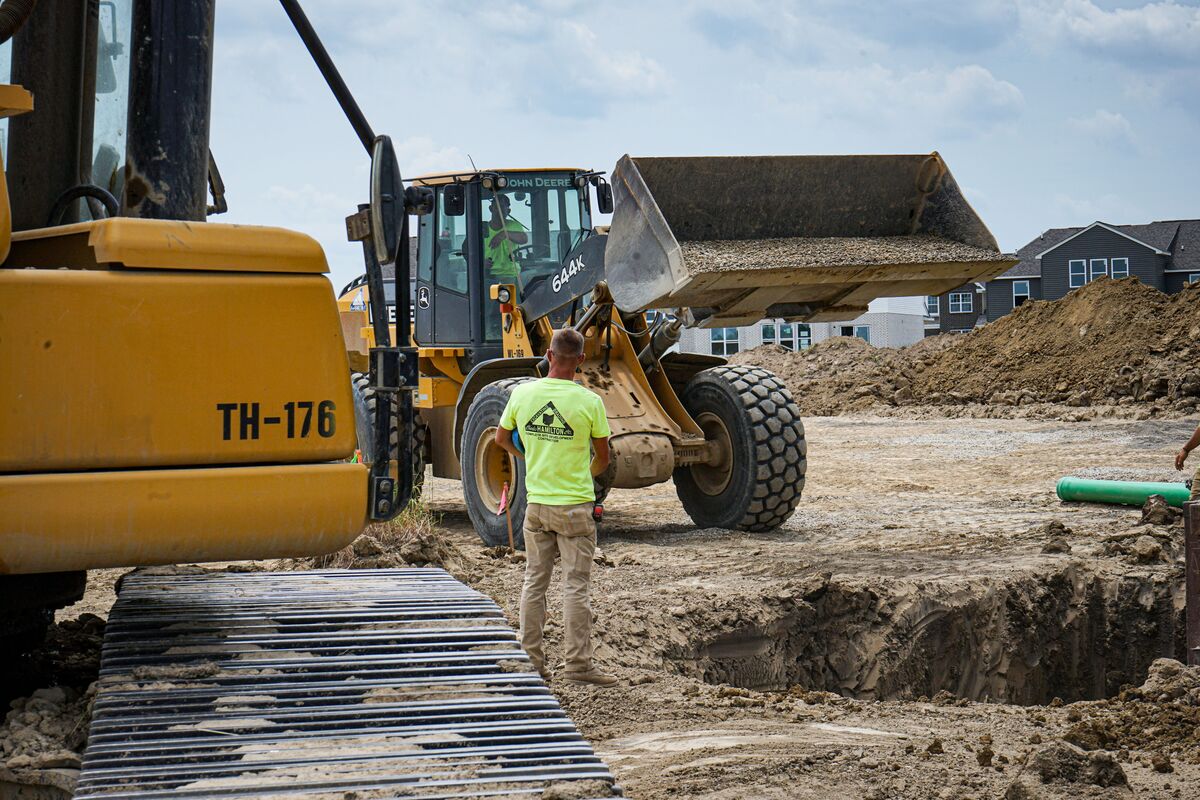
A safety incident stops your whole site. Work halts for the investigation while trades sit idle. That makes the record fair to ask about directly. The Department of Labor reported 39 trench and excavation deaths across the U.S. in 2022, more than double the 2021 total. The strong answer describes a safety program running today. Daily trench inspections by a competent person come first. That term means a trained crew member with the authority to stop work. Protective systems in every trench come next. Ask for proof of insurance too. A contractor with a defensible record covers all of it without flinching.
10. What's excluded from this estimate?
Two bids for the same site rarely differ because one contractor moves dirt for less. They differ in what each one left out. So ask what this estimate leaves out. A thorough estimate states its allowances in plain numbers. It brings up rock, soil, utility conflicts, and clearing limits before you do. The lowest bid tends to produce the longest pause here. That pause marks the gap between the bid in your hand and the invoice you will eventually get. Shortlist the contractor who stayed comfortable through all ten questions.
Bring Your Questions to Charles H. Hamilton
Charles H. Hamilton answers these questions every week. The company bids subdivisions across Southwest Ohio. Many of those bids arrive before final plans exist. That early pricing lets a developer test the budget on paper. More than 60 years of that work built answers that hold up under this list. Bring the whole interview. You will hear specific machines, named subdivisions, and an estimate that spells out its exclusions before you ask. Contact us to schedule your consultation.